
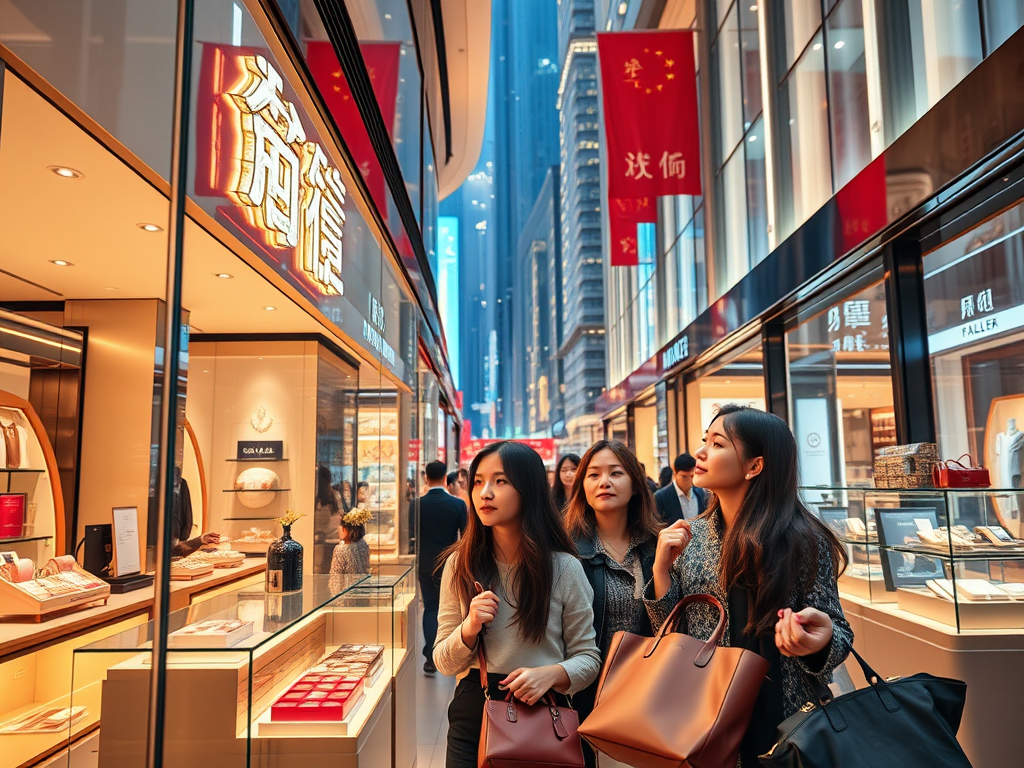
China’s personal luxury goods market is expected to return to modest growth in 2026 after two challenging years, according to a recent industry report by Bain & Company. However, analysts warn that the recovery is likely to remain fragile, uneven, and highly dependent on specific consumer segments and product categories.
The mainland luxury market declined by an estimated 3% to 5% in 2025, following a sharper contraction of nearly 17% to 19% in 2024. Despite this slowdown, China continues to play a crucial role in global luxury consumption, accounting for roughly a quarter of total luxury spending worldwide.
Recovery Driven by Selective Spending
The report highlights a significant shift in consumer behaviour, with Chinese shoppers becoming more cautious and selective in their purchases. Rather than spending broadly across luxury categories, consumers increasingly prioritised products perceived to offer “true value,” benefiting both affordable luxury brands and ultra-premium offerings.
Economic uncertainty, including concerns linked to the prolonged property sector slowdown and employment outlook, has weighed on consumer confidence. As a result, luxury brands have been forced to reassess pricing strategies, product positioning, and engagement with Chinese consumers.
Signs of Stabilisation in Late 2025
The luxury sector began showing signs of stabilisation in the second half of 2025, supported by improved market sentiment and a stronger domestic stock market. The recovery was also aided by comparisons with the weaker performance recorded in 2024.
Looking ahead, Bain expects moderate expansion in 2026, driven by gradual improvements in consumer confidence, growth of the middle-income population, and policy measures aimed at encouraging domestic consumption. However, growth is expected to remain uneven across categories.
Mixed Performance Across Luxury Segments
Performance varied significantly among product categories in 2025. The beauty segment emerged as the strongest performer, returning to growth of around 4% to 7% as consumers-maintained spending on personal care products.
Fashion and leather goods continued to face pressure, with fashion sales declining by an estimated 5% to 8%, while leather goods dropped between 8% and 11%, partly due to price increases. Demand for luxury watches saw one of the steepest declines, falling as consumers shifted toward investment assets or secondhand purchases.
Jewellery showed relative resilience, with declines narrowing compared to previous years, indicating stabilising demand in the category.
Rise of Local Brands and Experience-Led Spending
Another major trend shaping the market has been the growing influence of domestic Chinese luxury brands. These companies have gained attention by combining innovation with cultural relevance, increasingly competing with established global labels.
At the same time, consumer priorities have shifted toward travel, wellness, and experiences rather than purely material purchases, reflecting broader changes in lifestyle preferences among younger buyers.
The secondhand luxury market also expanded strongly, growing between 15% and 20%, as value-conscious consumers sought alternative purchasing options.
Domestic Spending Returns to the Forefront
Domestic purchases accounted for approximately 65% of Chinese luxury spending in 2025, reversing the previous trend of overseas buying. A weaker currency and narrowing international price differences encouraged consumers to shop within China even as outbound travel gradually recovered.
Meanwhile, traditional daigou purchasing channels — where shoppers buy luxury goods overseas on behalf of others — showed signs of slowing as brands strengthened control over unofficial distribution networks.
Outlook for 2026
Industry analysts expect China to remain a cornerstone of global luxury growth despite near-term challenges. Brands that maintain strong desirability, adapt pricing strategies, and align with evolving consumer expectations are expected to perform better in the current environment.
While the recovery in 2026 is unlikely to be rapid, gradual improvement in confidence and consumption could help stabilise the world’s second-largest luxury market after a period of recalibration.









Leave a Reply