
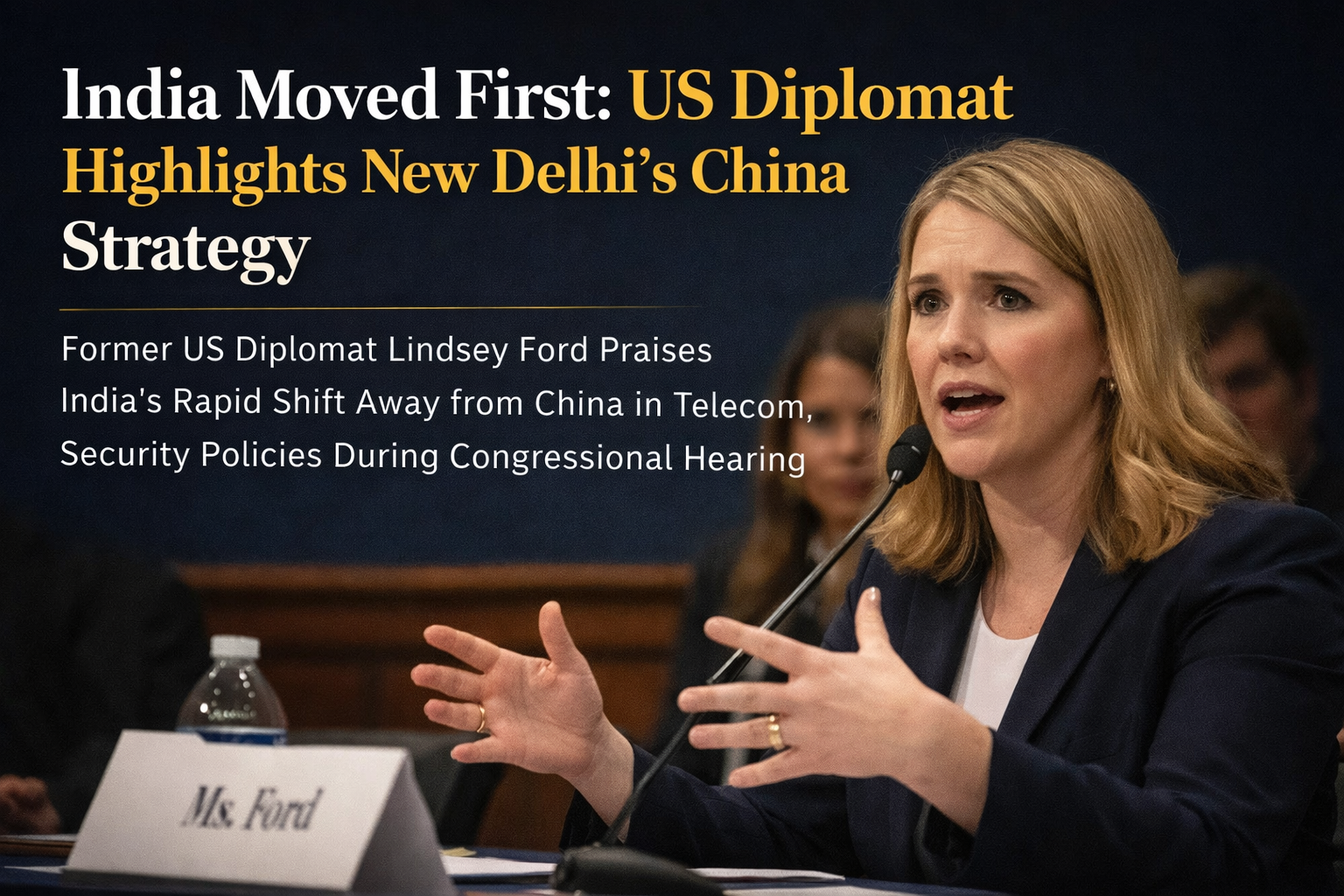
Former US diplomat Lindsey Ford recently drew attention to India’s evolving geopolitical position, describing New Delhi’s response to China as faster and more decisive than that of many other global powers. Her remarks come at a time when discussions around US foreign policy in Asia, particularly concerning India, Pakistan, and China, are gaining renewed focus in Washington.
Speaking before a US Congressional Commission, Ford noted that India acted swiftly in reducing its dependence on China in sensitive sectors such as telecommunications and digital platforms. She pointed out that India’s decisions to ban Chinese telecom equipment and several mobile applications following the 2020 Galwan Valley clash reflected a firm and realistic assessment of national security risks. According to her, India demonstrated a pragmatic understanding of the challenges posed by China — an approach she suggested Western allies, especially in Europe, should study closely.
India’s actions after the border tensions with China were largely driven by concerns over security vulnerabilities, including potential data risks and surveillance threats. While several Western nations were still debating regulatory responses, India moved quickly to restrict Chinese technological presence, positioning itself as one of the earliest major economies to take such measures at scale.
Ford also addressed the broader dynamics of India’s international relationships, particularly its long-standing ties with Russia. She cautioned US policymakers against pressuring India to completely distance itself from Moscow, arguing that such pressure could weaken the growing India–US partnership rather than strengthen it. In her view, understanding India’s strategic autonomy remains essential for sustaining cooperation between the two countries.
The discussion also touched upon the complex balance between US relations with India and Pakistan. Commissioner Jonathan Stivers raised questions about how Washington could build deeper trust with New Delhi if a future US administration were to prioritize India more strongly. Responding to the issue, Ford emphasized that the United States must take seriously the security concerns India has repeatedly raised regarding Pakistan, including apprehensions about the transfer of Western technology, training, and tactics that could eventually benefit China.
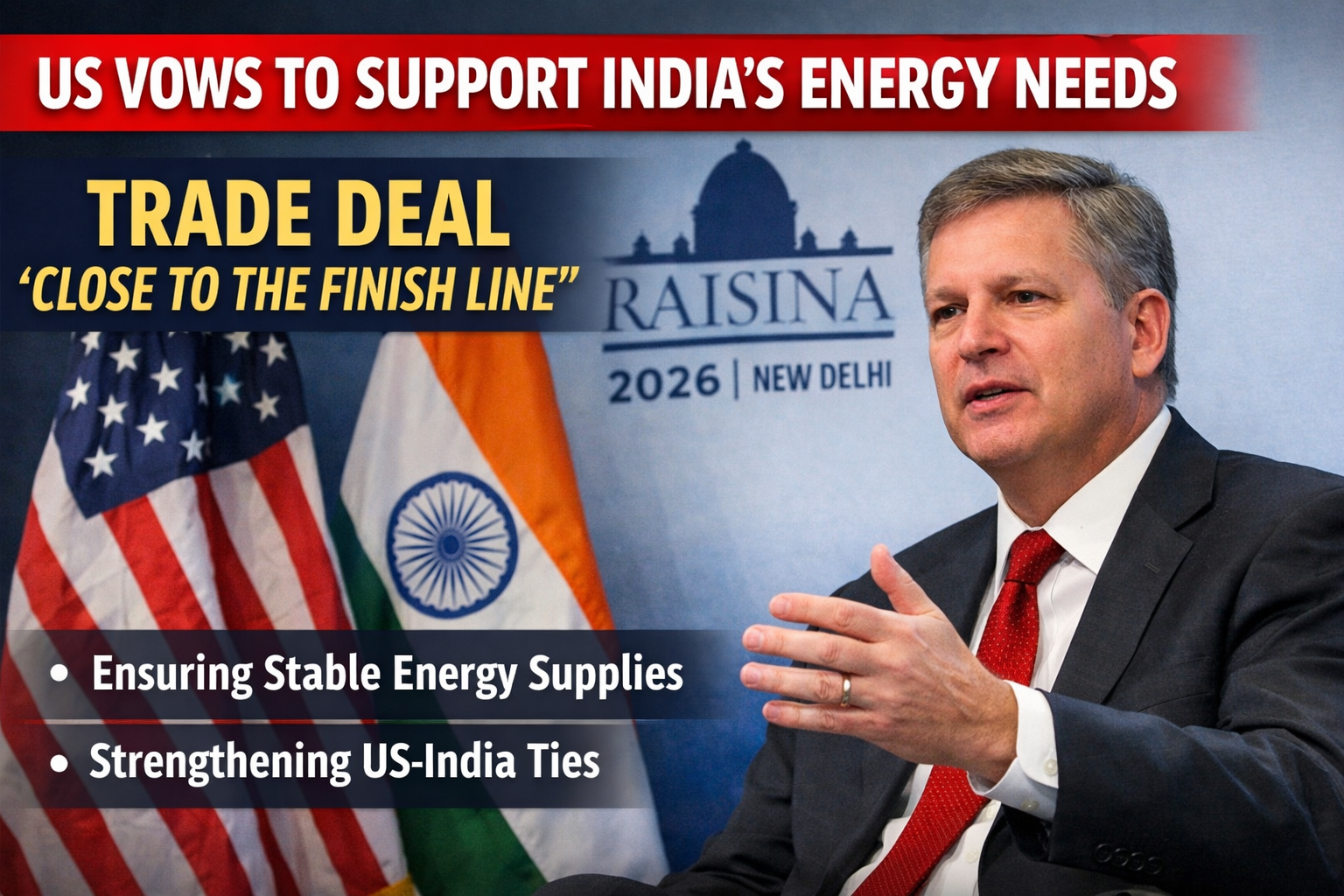
Her comments come shortly after India and the United States announced a trade agreement aimed at easing tariff barriers, signaling continued economic engagement between the two democracies. Observers view these developments as part of a broader shift in global alignments, where India’s strategic decisions — particularly regarding China — are increasingly shaping international discussions.
Overall, Ford’s remarks underline a growing recognition in Washington of India’s rising global influence and its pragmatic approach to navigating complex geopolitical challenges involving China, Pakistan, and Russia.





Leave a Reply