
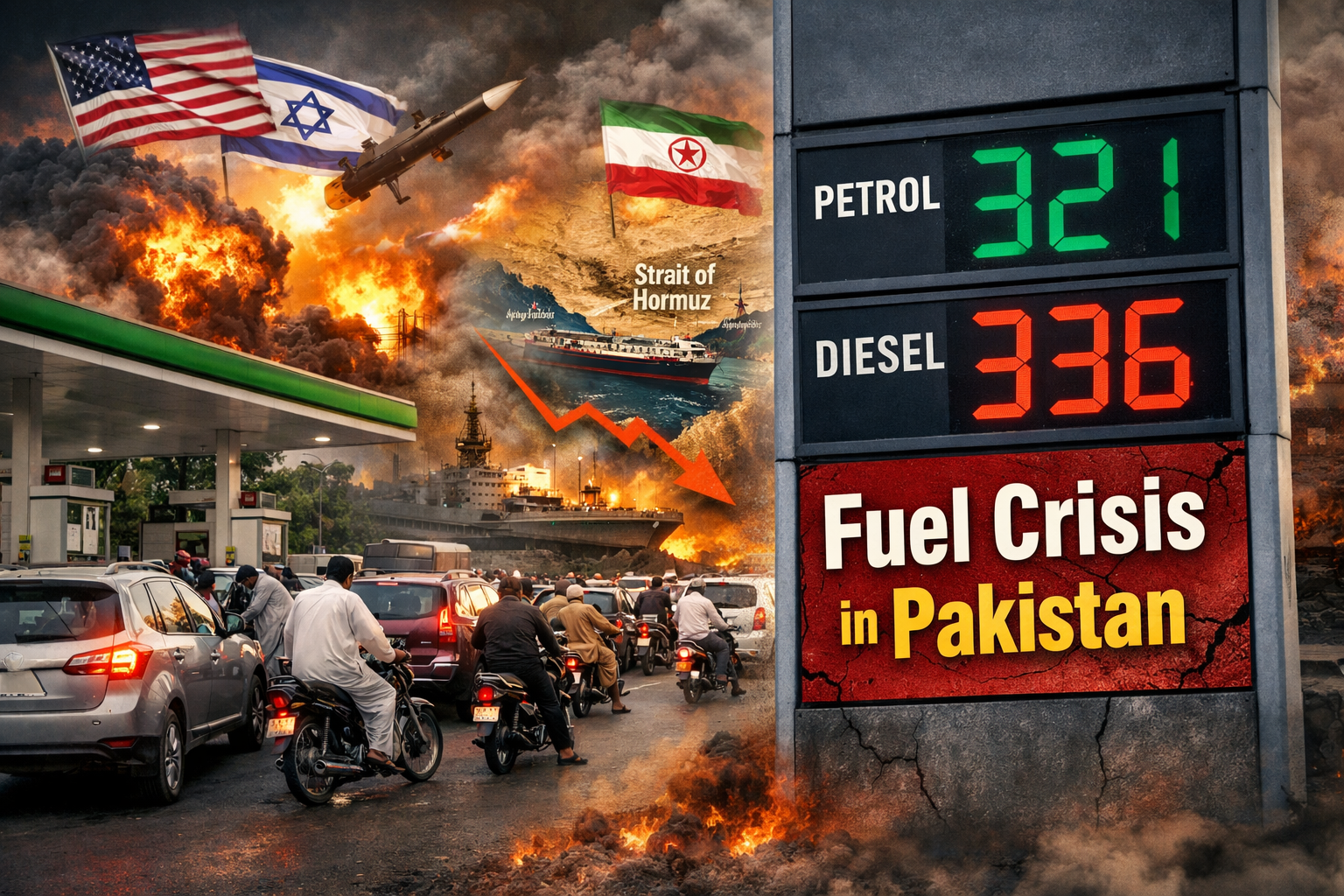
Pakistan has announced a sharp increase in fuel prices as the ongoing conflict in the Middle East disrupts global oil supplies and drives crude prices upward.
On Friday, the Pakistani government raised petrol and diesel prices by Rs 55 per litre. With this increase, petrol now costs Rs 321 per litre, while high-speed diesel has reached Rs 336 per litre, according to reports from The Express Tribune. Officials have warned that this may not be the last increase if the geopolitical tensions continue.
The price surge comes after global oil markets were shaken by escalating conflict involving the United States, Israel, and Iran, which has significantly disrupted energy supply routes and pushed crude oil prices to their highest levels in nearly two years.
The situation intensified after air strikes carried out by the United States and Israel reportedly killed Iran’s Supreme Leader Ali Khamenei, along with several senior Iranian officials. In response, Iran launched retaliatory strikes on US military bases located in Gulf countries.
Adding to the crisis, Iran closed the Strait of Hormuz, one of the most critical global shipping routes for oil. A large portion of the world’s petroleum exports pass through this narrow waterway, and its closure has disrupted shipping operations and energy exports across the region.
Pakistan Under Energy Pressure
Pakistan, like many developing nations, depends heavily on imported fuel to meet its energy needs. The sudden disruption in global supply has forced the government to reassess its energy strategy.
Pakistan’s Petroleum Minister Ali Pervaiz Malik announced the new fuel prices after Prime Minister Shehbaz Sharif approved a weekly fuel price adjustment mechanism.
Malik stated that global oil prices had surged dramatically within just a few days.
He explained that the government is facing uncertainty about how long the crisis might last and emphasized the need for proactive planning to maintain fuel availability.
According to Malik, international price benchmarks show a dramatic rise. Over the past six days, the average Platts petrol price increased from $78 per barrel to $106.80, representing a 37% rise. Meanwhile, diesel prices surged from $88 to $150 per barrel, marking a 70% jump.
Due to this rapid escalation, the government said it had little choice but to increase domestic fuel prices in order to maintain supply stability.
Rising Inflation Concerns
Economists and officials warn that the sharp rise in fuel prices will likely increase transportation costs, food prices, and overall inflation across the country.
To manage the impact, the government has partially shielded sectors considered essential. Diesel, which is widely used in agriculture and public transportation, will receive some subsidy, while petrol consumers will bear a larger share of the price increase.
In addition, the government raised the petroleum levy on petrol to Rs105.4 per litre, while reducing the levy on diesel to Rs55 per litre.
Pakistan’s Finance Minister Muhammad Aurangzeb warned that the government must prepare for multiple possible outcomes as the global situation evolves.
“Hope is not a strategy,” he said, stressing the importance of planning ahead for prolonged instability.
Meanwhile, Deputy Prime Minister Ishaq Dar said Pakistan is working with regional partners in diplomatic efforts to reduce tensions and stabilize the situation.
He stated that Pakistan is actively coordinating with international partners to de-escalate the conflict and prevent the crisis from turning into a larger war, which could further disrupt global energy markets.
As the situation in the Middle East continues to unfold, Pakistan and other import-dependent nations remain vulnerable to further economic pressure if oil supply disruptions persist.






Leave a Reply