

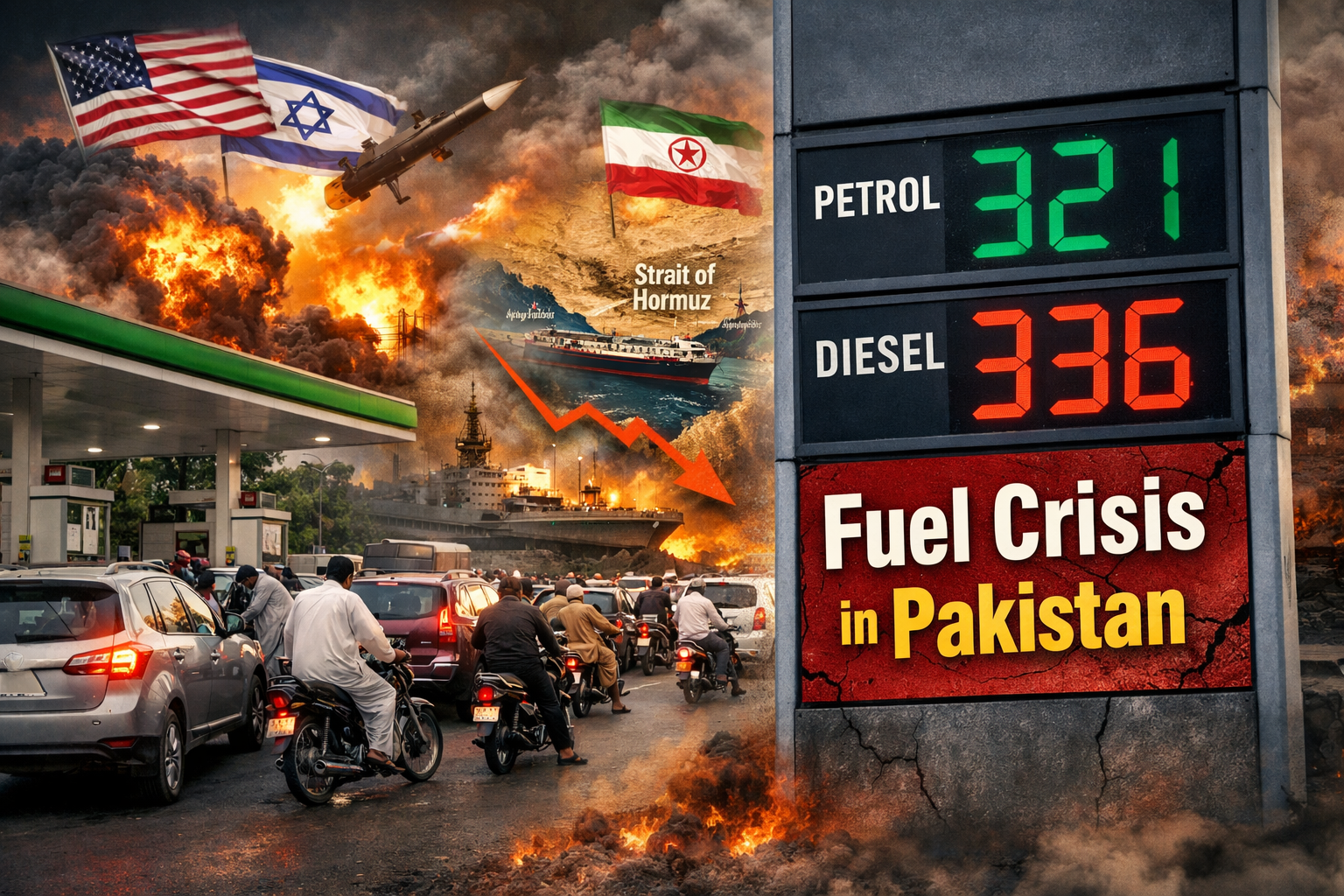
The recent escalation in the Middle East, marked by Iranian missile and drone strikes on US bases and Gulf territories, has raised a critical question: Why have Arab countries not directly retaliated against Iran despite being hit?
At first glance, restraint may appear surprising. Gulf nations such as Saudi Arabia, the UAE, Qatar, Bahrain, Kuwait, and Oman have built an image of stability and strength over the past three decades. Their cities are global financial hubs, tourism magnets, and energy powerhouses. Yet even after Iranian strikes targeted industrial facilities and urban areas, the response from these states has been measured rather than military.
The reasons are complex — and largely strategic.
A Calculated Decision, Not Weakness
For Gulf monarchies, survival and stability are paramount. Direct military retaliation against Iran would almost certainly trigger escalation. Iran possesses significant missile and drone capabilities, as well as regional proxy networks capable of targeting oil infrastructure, desalination plants, airports, and even leadership compounds.
These states understand that a full-scale conflict would not be symbolic — it would be devastating. Oil exports could be disrupted, shipping through the Strait of Hormuz threatened, foreign investment shaken, and ambitious economic transformation plans severely damaged.
In this context, restraint is not passivity. It is risk management.
The Escalation Trap
Iran has made clear, both officially and through unofficial channels, that attacks on its territory would invite direct retaliation. Gulf leaders know that escalation would be rapid and personal. Once a regional war begins, controlling its scope becomes nearly impossible.
For countries that depend heavily on energy exports and global trade routes, prolonged instability would be economically catastrophic.
The Religious Optics Factor
The concept of the Muslim Ummah — the global Muslim community — also plays a role, though not necessarily in doctrinal terms. Iran is a Shia-majority nation, while most Gulf states are Sunni-majority. Historically, the Shia-Sunni divide has shaped regional rivalries.
However, when conflicts involve external actors like the United States or Israel, religious narratives often shift. If Arab governments were to immediately attack Iran following a US-Israeli strike, it could be framed by Tehran as Sunni regimes siding with Western powers against a Muslim state.
Such perception could inflame public opinion across the region, particularly in countries with significant Shia populations. Gulf rulers are acutely aware that domestic stability can be influenced by regional religious narratives.
Thus, the religious dimension is less about solidarity and more about managing public sentiment.
The Israel Complication
Another sensitive factor is optics regarding Israel. Public opinion in the Arab world remains strongly pro-Palestinian. The ongoing Gaza conflict has heightened tensions and sensitivities.
If Arab states retaliate militarily against Iran, it risks being interpreted as alignment with Israel and the US security axis. Even countries that have normalized ties with Israel must carefully manage domestic and regional perceptions.
Maintaining distance from overt military alignment helps avoid backlash.
Economic Transformation at Stake
Countries like Saudi Arabia and the UAE are in the middle of ambitious economic diversification programs. They are investing in tourism, technology, renewable energy, and global finance.
War would undermine investor confidence, increase insurance and shipping costs, and potentially delay major infrastructure projects. Financial markets are highly sensitive to geopolitical instability.
Simply put, conflict is bad for business — and these nations are increasingly business-driven powers.
Diplomacy as Leverage
By exercising restraint, Arab states retain diplomatic flexibility. They can condemn Iranian strikes while still keeping communication channels open. Several Gulf countries had recently improved ties with Tehran after years of hostility.
An immediate military response would erase years of cautious diplomatic rebuilding.
Tactical Restraint Over Religious Loyalty
Ultimately, the decision not to retaliate appears driven more by strategic calculation than religious allegiance. The concept of the Muslim Ummah influences public narrative, but statecraft in the Gulf is guided primarily by regime security, economic preservation, and escalation avoidance.
Arab nations are not choosing Iran over Western allies. Nor are they endorsing Iranian actions. They are choosing stability over confrontation.
In the volatile landscape of the Middle East, restraint is often a deliberate show of strength — not weakness.







Leave a Reply