
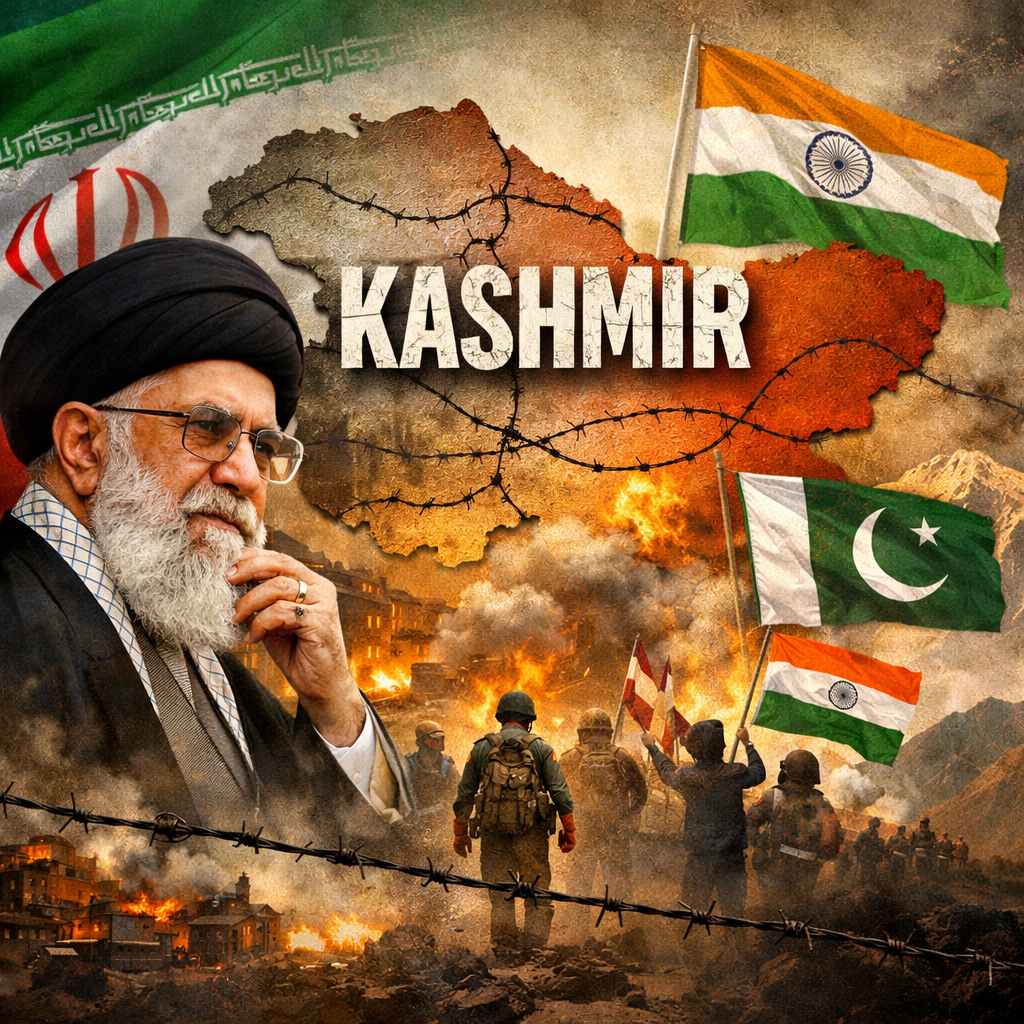
Recent reports claiming the death of Iran’s Supreme Leader Ali Khamenei have triggered strong reactions across parts of the Middle East and among sections of the Shia community in India, including in Kashmir. Amid these developments, questions have resurfaced about Iran’s historical position on Kashmir and whether Khamenei supported India after the abrogation of Article 370.
Did Khamenei Support India After Article 370?
Following India’s decision in 2019 to revoke Article 370, which granted special status to Jammu and Kashmir, Khamenei publicly expressed concern about the condition of Muslims in the region. While he acknowledged that Iran maintained good relations with India, he urged New Delhi to adopt what he described as a “just policy” toward Kashmiri Muslims. India rejected these comments. Therefore, it would not be accurate to say that Khamenei supported India’s move on Article 370.
Iran’s Evolving Stand on Kashmir
Iran’s approach to Kashmir has shifted over time, shaped by changing political leadership and regional dynamics.
During the Shah’s Era
Under Mohammad Reza Pahlavi, Iran openly supported Pakistan’s position on Kashmir and was aligned against India on the issue.
After the 1979 Islamic Revolution
When Ruhollah Khomeini came to power, Iran reoriented its foreign policy. Instead of openly backing Pakistan, Tehran adopted a more cautious and balanced approach toward both India and Pakistan.
The 1990s and Diplomatic Balancing
During the height of militancy in Kashmir in the 1990s, Iran expressed concern over the situation of Muslims but avoided fully endorsing Pakistan’s diplomatic campaign against India. In 1990, Khamenei spoke about the suffering of Kashmiri Muslims, framing it as an issue of justice. However, Iran did not escalate its stance into direct diplomatic confrontation with India.
How Iran Indirectly Helped India
In the 1990s, Pakistan attempted to push a resolution against India at the Organisation of Islamic Cooperation (OIC), accusing India of human rights violations in Kashmir. At the time, India was led by Prime Minister P. V. Narasimha Rao.
Through diplomatic engagement, India secured Iran’s neutrality at the OIC. Iran did not back Pakistan’s proposed resolution, which prevented it from gaining wider international traction. This episode demonstrated the strategic importance of India–Iran relations.
A Relationship Built on Strategic Interests
India and Iran share longstanding ties rooted in geography, trade, and regional strategy. Iran’s location gives India access to Afghanistan and Central Asia, and Tehran has occasionally criticized Pakistan, which has indirectly strengthened India’s regional standing. At the same time, Iran has periodically voiced concern over Kashmir, reflecting its position as a Shia-majority Islamic republic with global religious considerations.
Conclusion
Iran’s stance on Kashmir has never been entirely one-sided. While its leadership, including Khamenei, has at times criticized India’s policies—especially after the abrogation of Article 370—it has also maintained pragmatic and strategic relations with New Delhi.
Rather than consistent support for either India or Pakistan, Iran’s policy has largely been guided by geopolitical interests, regional balance, and diplomatic calculations.





Leave a Reply