
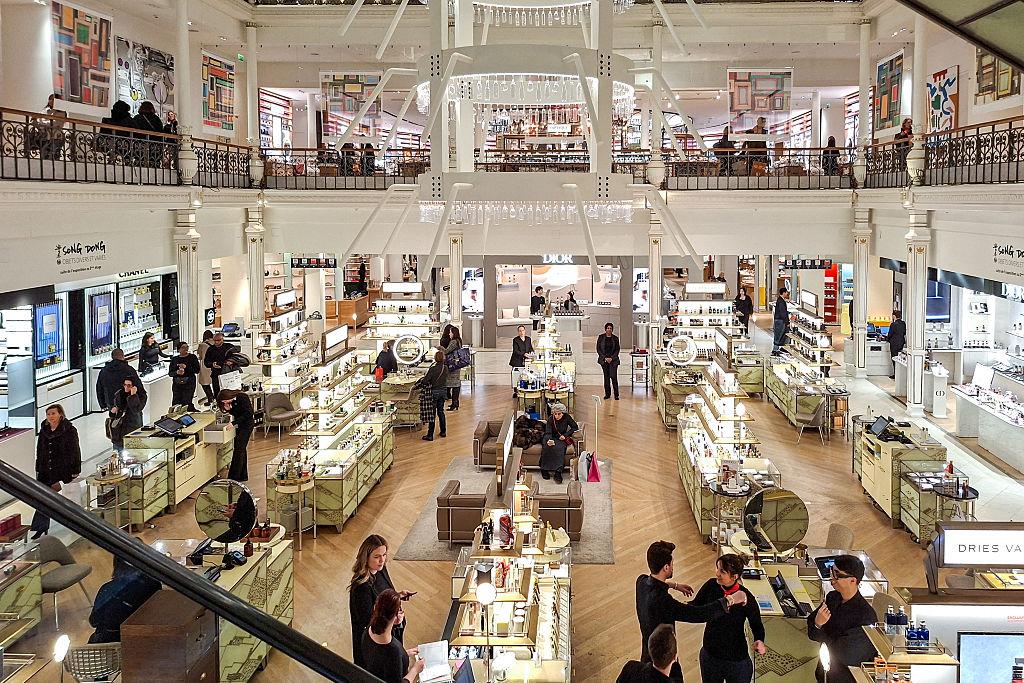
Luxury retail is undergoing a fundamental reset. As consumer spending softens and expectations rise, The Future of Experience report by Sybarite argues that the industry must move beyond traditional sales-driven metrics and rethink what success truly means. The future of retail, it suggests, lies not in transactions — but in transformation.
Looking Back to Move Forward
The report begins with the story of Le Bon Marché, the iconic Parisian department store that evolved from a humble hat shop into a retail pioneer. Its success was rooted in bold thinking and a willingness to redefine what a shopping space could be. That same spirit of reinvention, the report argues, is essential today.
Across Europe, leading department stores are reconnecting with their heritage while modernising their spaces to remain culturally relevant. The most successful destinations share common pillars: a strong sense of place, social engagement, curated dining, outstanding service, and moments of surprise that spark emotion.
Retail as a Cultural Ecosystem
In Asia and the Middle East, retail innovation is accelerating even faster. Sybarite co-founder Simon Mitchell introduces the concept of “Hyper-Hybrid Retail” — a model where shopping blends seamlessly with culture, hospitality, entertainment, and storytelling.
Rather than relying on temporary pop-ups or trend-driven installations, this approach builds long-term, immersive environments that evolve with customers. Retail spaces are becoming multidimensional ecosystems — not just places to buy, but places to gather, experience, and belong.
Increasingly, retail developments are also shaping cities themselves, influencing sustainability efforts, cultural identity, and urban vitality.
Relationships, Not Transactions
Industry leaders such as Michael Ward of Harrods emphasise that luxury is a dialogue between brand and customer. In times of uncertainty, resilience comes from emotional intelligence and meaningful human connection.
While technology is transforming stores into “phygital” environments — blending digital tools with physical spaces — the fundamentals remain unchanged. Personal service, operational excellence, and attentive staff continue to drive satisfaction. Research cited in the report shows that more than 70% of customers still value human interaction during shopping.
Design That Delivers Results
In collaboration with Savills, the report analysed 23 global malls and department stores across 14 design criteria. The findings reveal that interior design fostering a strong sense of place significantly improves commercial performance. Social-media-friendly spaces and well-curated dining experiences also correlate with stronger results.
This supports a broader shift away from narrow ROI thinking toward more holistic measures of success — including return on design, creativity, loyalty, and experience.
A New Era of Retail Leadership
Retail pioneers such as Selfridges, Harvey Nichols, and China’s SKP are already embracing this evolved model. Their spaces blend commerce with editorial storytelling, cultural programming, and immersive design.
The message is clear: the future of luxury retail belongs to brands that create living, breathing environments — spaces that adapt, inspire, and foster community.
In an increasingly digital and fragmented world, physical retail has a renewed purpose. It anchors neighbourhoods, builds belonging, and delivers moments of wonder.
Luxury today is not about perfection. It is about experience.





Leave a Reply