
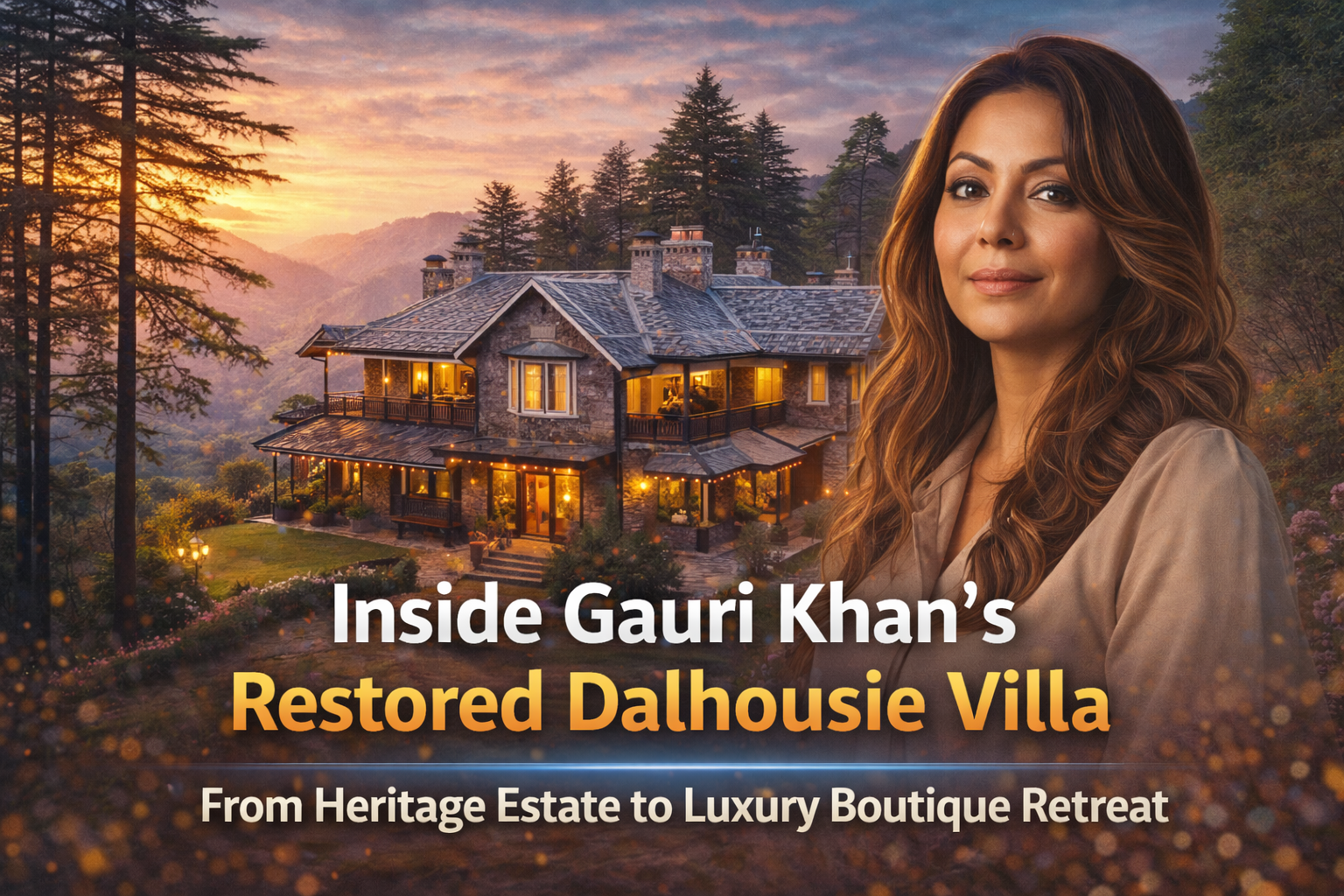
Gauri Khan’s restoration of her ancestral family home in Dalhousie reflects more than a luxury real estate project — it represents a growing trend where heritage properties are being transformed into curated boutique experiences while preserving emotional and architectural legacy. The century-old property, now known as The Chestnut Grove, blends personal history with contemporary design sensibilities, highlighting the evolving intersection of nostalgia, luxury, and experiential travel.
A Personal Project Rooted in Memory
Unlike many celebrity-led hospitality ventures, this restoration carries strong personal significance. The villa, originally purchased in 1933 by Gauri Khan’s great-grandfather, served as a central gathering space for family vacations during her childhood. This emotional connection shaped the restoration approach, with the design focused on retaining the character of the original home rather than replacing it with modern luxury aesthetics.
The involvement of family member Rustam Tiwari in the design process further reinforced the intent to preserve shared memories while adapting the property for present-day hospitality needs.
Heritage Meets Contemporary Luxury
Spread across approximately 8,000 square feet, the six-bedroom villa has been redesigned to function as an exclusive luxury retreat while maintaining its hill-station charm. The design philosophy centres on warmth and comfort rather than opulence. Wooden interiors, stone textures, fireplaces, and large communal spaces create a lived-in atmosphere that aligns with mountain living.
Architectural elements such as glass-heavy facades and skylights allow natural light to dominate interiors, enhancing openness and connection with the surrounding landscape. Private gardens, suite-style rooms, and attic spaces contribute to a boutique experience that prioritises privacy and relaxation.
Location as Part of the Experience
Set amid tall trees and lush greenery in Dalhousie, the villa capitalises on its natural environment. Seasonal changes — especially snow-covered winters — form an integral part of the property’s appeal, reinforcing the growing demand for destination stays that offer both exclusivity and immersion in nature.
This reflects a wider shift in luxury tourism, where travellers increasingly seek experiences tied to location, heritage, and authenticity rather than conventional hotel stays.
The Business Model: Luxury with Limited Access
The property is positioned as a premium rental space targeted at families or groups seeking privacy and personalised experiences. With individual room tariffs varying by season and full-villa rentals priced around ₹1.2 lakh per night, the model aligns with the rise of high-end boutique rentals competing with luxury hotels.
Such properties appeal to travellers looking for exclusivity, longer stays, and shared social spaces — a segment that has grown significantly in the post-pandemic travel landscape.
Analysis: Celebrity Design and Experiential Hospitality
From an analytical perspective, The Chestnut Grove represents a convergence of personal branding and experiential hospitality. Gauri Khan’s identity as an interior designer adds credibility to the project while transforming a family legacy into a commercially viable yet emotionally rooted space.
The restoration also illustrates a broader trend in India’s luxury hospitality sector — the revival of heritage homes as boutique destinations that combine storytelling, design, and comfort. Rather than focusing solely on luxury, the project underscores how memory, architecture, and lifestyle can be integrated to create spaces that feel both exclusive and deeply personal.






Leave a Reply