
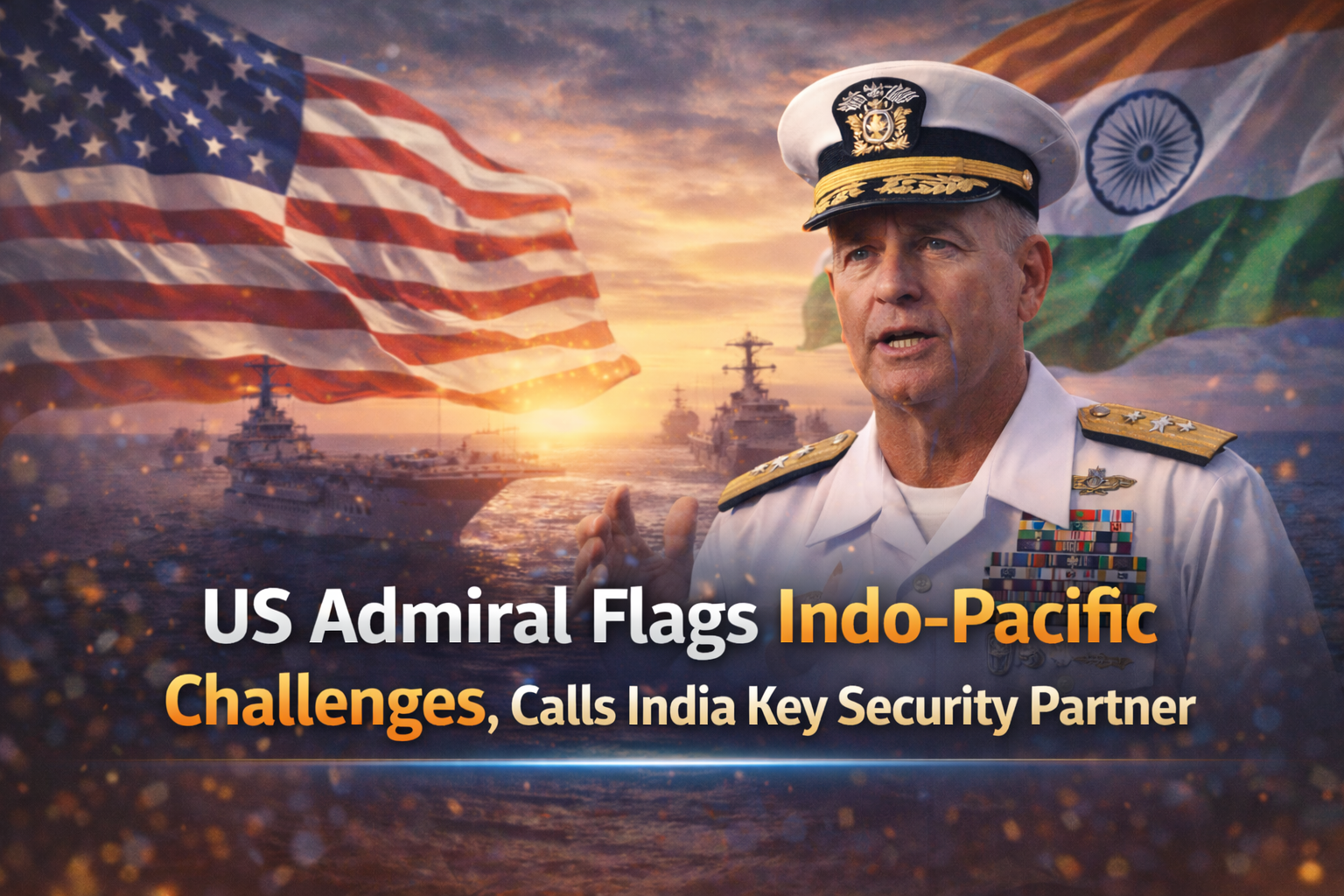
The recent remarks by US Indo-Pacific Command chief Admiral Samuel J. Paparo during his India visit underline the deepening strategic alignment between India and the United States, particularly in the defence and security domain. His comments, praising India’s “tactical execution” during Operation Sindoor while highlighting the importance of restraint, reflect a broader shift in how Washington views India’s role in regional security.
Recognition of Military Capability and Strategic Restraint
Admiral Paparo’s assessment of Operation Sindoor goes beyond operational praise. By acknowledging both execution and restraint, the remarks signal recognition of India’s evolving military doctrine — one that balances force projection with escalation control. Such acknowledgement from a senior US military commander indicates growing confidence in India as a responsible security actor in a volatile region.
The Admiral also noted the Indian military’s willingness to learn from operational experiences, suggesting that modern conflicts are increasingly viewed as opportunities to adapt tactics, technology integration, and decision-making processes.
Lessons from Modern Warfare
A key analytical takeaway from Paparo’s comments is the emphasis on the complexity of modern warfare. His reference to long-range weapon systems and interconnected “kill chains” reflects the changing nature of conflict, where sensors, communications, electronic warfare, and data integration play as crucial a role as traditional firepower.
This observation is particularly relevant in the context of evolving regional dynamics, where technological capability and information dominance increasingly define military effectiveness.
Indo-Pacific Concerns and Shared Strategic Interests
The Admiral’s remarks also highlighted concerns about rising coercion and military assertiveness in the Indo-Pacific region. With the region accounting for a majority of global population, economic output, and military strength, both India and the United States see stability and freedom of navigation as shared priorities.
His statement that India is a “net security contributor” to the Indian Ocean region reflects Washington’s growing expectation that India will play a larger role in maintaining regional balance and maritime security.
Defence Partnership on an Upward Trajectory
Paparo described India-US defence ties as being on a “steeply upward trajectory,” pointing to expanding military exercises, institutional agreements, and operational cooperation. Joint exercises such as Malabar, Yudh Abhyas, Tiger Triumph, and COPE India have increasingly moved from symbolic engagement to interoperability-focused collaboration.
The emphasis on maritime cooperation and undersea domain awareness suggests that future cooperation will focus heavily on naval and Indo-Pacific security challenges.
Technology, AI and the Future of Defence Cooperation
Another significant aspect of the Admiral’s remarks was the role of emerging technologies. He identified artificial intelligence, space capabilities, electronic warfare, and information dominance as defining elements of 21st-century warfare. His endorsement of India’s upcoming AI summit signals alignment between the two countries in exploring defence applications of advanced technologies.
Analysis: Strategic Messaging Beyond Military Praise
From an analytical standpoint, the Admiral’s statements serve both diplomatic and strategic messaging purposes. Praising India’s operational conduct reinforces defence trust while simultaneously signalling shared concerns about regional security challenges, particularly in the Indo-Pacific.
The remarks suggest that India-US defence cooperation is moving beyond transactional engagement toward long-term strategic convergence — driven by shared geopolitical interests, technological collaboration, and mutual concerns about regional stability.




Leave a Reply