
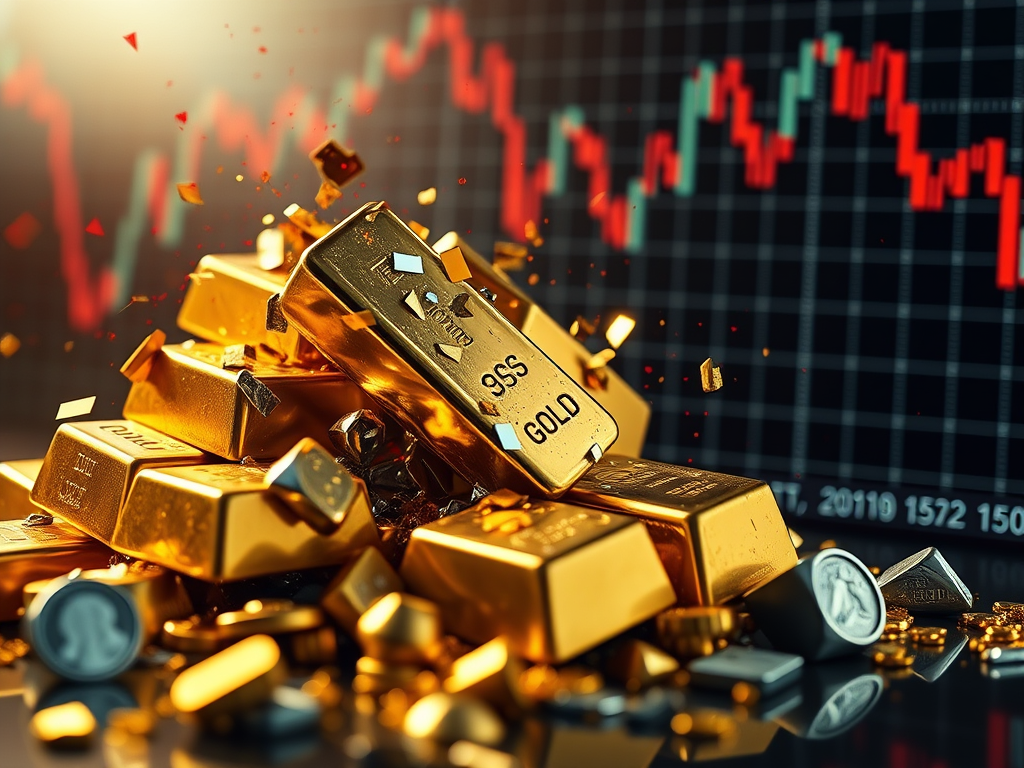
Gold and silver prices witnessed a sharp correction in global markets on Thursday, with both precious metals falling significantly amid shifting expectations around US interest rate policy. The decline followed stronger-than-expected US labor market data, which reduced investor confidence that the Federal Reserve will begin cutting interest rates in the near term.
Gold futures dropped nearly 2.3%, falling by about $117 to trade around $4,981 per ounce, while silver futures experienced a steeper sell-off, plunging close to 9% to approximately $76.53. The sudden downturn marks one of the most notable single-day pullbacks seen in 2026 so far.
Strong US Economic Data Triggers Sell-Off
The primary catalyst behind the decline was robust US employment data, which signaled continued economic strength. The US economy added approximately 130,000 nonfarm payroll jobs in January, significantly exceeding market expectations of around 70,000 jobs. At the same time, the unemployment rate declined to 4.3%, reinforcing the view that the labor market remains resilient.
Weekly jobless claims also remained relatively stable, indicating that layoffs are not rising meaningfully. Together, these indicators suggest that the US economy is not slowing as quickly as previously anticipated.
For precious metals, this creates pressure. Gold and silver typically benefit when interest rates are expected to fall. However, stronger economic data reduces the urgency for rate cuts, making interest-bearing assets more attractive compared to non-yielding assets like gold.
Rising Dollar and Bond Yields Add Pressure
Following the jobs report, the US dollar strengthened, pushing the dollar index higher. Since gold and silver are priced in US dollars, a stronger dollar makes them more expensive for international buyers, reducing demand.
At the same time, rising US Treasury yields increased the opportunity cost of holding precious metals, prompting investors to reduce exposure and lock in profits after the strong rallies seen over the past year.
Rate Cut Expectations Fall Sharply
Market expectations for an early Federal Reserve rate cut changed dramatically after the data release. Prior to the jobs report, investors were pricing in roughly a 20% probability of a rate cut in March. That expectation has now dropped sharply to around 8%.
This shift triggered a rapid unwinding of positions that were built on expectations of easier monetary policy, accelerating the downward movement in both gold and silver prices.
Gold Outlook: Correction Within a Larger Uptrend
Despite the recent fall, analysts suggest that gold’s broader trend remains positive. Prices are currently consolidating after a strong rally that pushed gold close to record highs earlier in the year.
Key technical support is seen near the $4,900 level. A break below this zone could lead to a deeper correction, while a recovery in rate-cut expectations could push prices back toward the $5,100–$5,200 range.
Long-term fundamentals remain supportive, driven by continued central bank buying and sustained demand for safe-haven assets during periods of economic uncertainty.
Silver Faces Higher Volatility
Silver has experienced a sharper decline compared to gold due to its higher volatility and the unwinding of leveraged positions following its massive rally in 2025. After gaining more than 140% last year, silver prices were vulnerable to profit-taking during market shifts.
Currently, silver is testing important support levels between $74 and $80. Analysts believe that strong buying interest may emerge in the $65–$70 range if prices decline further.
In the longer term, industrial demand continues to support silver’s outlook. Growing use in solar energy, electric vehicles, and electronics remains a key structural driver for future demand.
Market Outlook
The current correction reflects changing expectations rather than a fundamental breakdown in precious metals. Investors are now closely watching upcoming US economic data and Federal Reserve signals for clues about future monetary policy direction.
If inflation moderates or economic momentum slows later in the year, gold and silver could regain upward momentum. Until then, markets are likely to remain volatile as traders adjust positions in response to evolving rate expectations.













Leave a Reply