
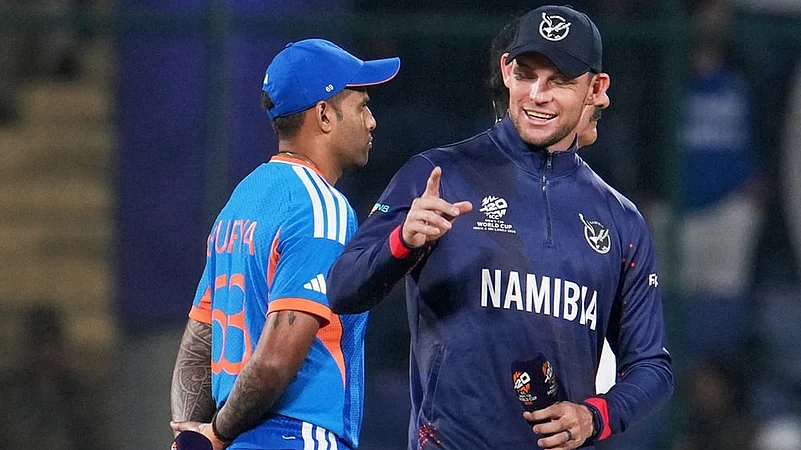
A tense moment during the India vs Namibia clash in the 2026 T20 World Cup triggered controversy after Namibian captain Gerhard Erasmus reacted angrily to a “dead ball” decision by umpire Rod Tucker at the Arun Jaitley Stadium in Delhi. The incident occurred during a crucial phase of the match, briefly halting momentum and sparking debate over the interpretation of cricket laws.
Erasmus, who brought Namibia back into the game with a strong spell after India’s rapid start, saw one of his deliveries declared a dead ball due to concerns over his round-arm sling action and release point from behind the crease. The decision forced him to re-bowl the delivery, leading to visible frustration from the Namibian skipper and an on-field exchange with the umpire.
The call proved significant, as the original delivery had been signalled wide, meaning India did not receive an extra run after the dead ball ruling. Interestingly, Erasmus was later allowed to continue bowling with a similar approach and went on to dismiss Tilak Varma, adding further intrigue to the incident.
Cricket analysts noted that while bowlers often deliver from behind the crease, the laws do not clearly define limits in such situations. Under MCC regulations, a dead ball can be called if an umpire considers an action unfair or distracting, leaving room for interpretation. As a result, opinions remain divided, with some questioning the consistency of the decision while others argue the umpire acted within his discretionary powers.
The episode has since become one of the most discussed moments of the match, highlighting how grey areas in cricket’s rules can quickly turn into flashpoints on the world stage.








Leave a Reply